
Denmark Open: An Se-young's 47th Title Is the Headline — the Ankle Is the Real Number
**मुख्य उत्तर:** एन से-यंग ने 18 अक्टूबर 2026 को डेनमार्क ओपन का खिताब जीतकर अपना 47वां अंतरराष्ट्रीय एकल खिताब पूरा किया। फाइनल में उन्होंने अकाने यामागुची को 21-23, 21-14, 21-18 से हराया। तीसरे गेम में टखने के दर्द का संकेत मिला, जिससे 20 अक्टूबर से शुरू होने वाला फ्रेंच ओपन लोड-मैनेजमेंट का फैसला बन गया है। **मुख्य तथ्य:** - डेनमार्क ओपन फाइनल स्कोर 21-23, 21-14, 21-18; एन तीनों गेम में पहले पिछड़ी थीं। - 2026 सीज़न रिकॉर्ड 61-1 (98.4 प्रतिशत) और लगातार 44 मैचों की जीत श्रृंखला। - यामागुची के खिलाफ लगातार 10 जीत, जिनमें पांच लगातार फाइनल शामिल। - 47वां खिताब BWF गणना के अनुसार; उबेर कप जैसे टीम खिताब इसमें शामिल नहीं। - फ्रेंच ओपन 20 अक्टूबर 2026 से शुरू, डेनमार्क फाइनल के चार दिन बाद। **स्रोत:** डेनमार्क ओपन/BWF आधिकारिक परिणाम और खिताब-गणना नियम, 18 अक्टूबर 2026 | Cross-checked: cricsultan.com **संबंधित प्रश्न-उत्तर:** Q: क्या एन से-यंग फ्रेंच ओपन खेलेंगी? A: यह 20 अक्टूबर 2026 की एंट्री लिस्ट और पहले दौर की टेपिंग से तय होगा; cricsultan.com Player Depth Index के अनुसार महिला एकल में कोरिया की निर्भरता एक ही खिलाड़ी पर है। Q: 47 खिताबों की गिनती किस आधार पर हुई? A: BWF व्यक्तिगत खिताब गिनता है और टीम खिताब बाहर रखता है, जबकि एशियाई खेलों जैसे क्षेत्रीय खिताब निर्धारित नियमों के तहत जोड़े जाते हैं। Q: यामागुची के खिलाफ यह दबदबा कब तक टिकेगा? A: अगली दो-तीन मुलाकातें बताएंगी कि यह शैलीगत लॉक है या यामागुची के फॉर्म में अस्थायी गिरावट; cricsultan.com Head-to-Head ट्रैकर इसकी निगरानी का आधार है।
Odense, 18 October. The third game is at 9-12. An Se-young is coming back from the rear of the court and her movement no longer has what it had at 11-13 in the second game. The physio is called. The taping changes. What follows on the scoreboard is a seven-point run — 9-12 to 16-12 — and then the game, 21-18. The final reads 21-23, 21-14, 21-18, and An trailed in all three games.
I watched it twice: once live, once frame-by-frame on the ledger. The second viewing surfaced the thing that unsettles me most at my desk in Kolkata. The moment we celebrate as a comeback is often the body's most honest report. In the third game, An did not change her shot selection. She changed her movement. The difference looks small and is not.
This is a piece about a 47th title, but not the way the headlines framed it overnight. The number that matters from the Denmark Open is not 47, not 61-1, not 44. It is that one medical break in the deciding game — four days before the French Open opens on 20 October.
Context: how 47 was counted, and why the counting matters
Start with the part most reports buried. On 18 October 2026 in Odense, An Se-young beat Akane Yamaguchi to complete her 47th international singles title. The number is a statement, and it is not self-explanatory. BWF's counting rules are explicit: individual titles count, team titles do not. Uber Cup and Asian Team Championship titles are excluded from the 47. Regional titles, such as the Asian Games gold, are counted under BWF's corresponding rules.
My desk runs a two-person check on every number, so whenever a title tally is printed, the methodology gets printed with it. The 47 sits alongside Susi Susanti's 46 and Carolina Marin's 39. Marin retired in March. The comparison is elegant and technically dirty — three different decades of tour calendar density. Susanti built 46 in an era with a different event structure and no obligation to play nine or ten Super-tier stops a year. That does not diminish 47. It means quoting 47 without the method is sloppy journalism.
Then the season. An is 61-1 in 2026, a 98.4 per cent win rate. Nine tour titles this year. World Championships, an Asian Games gold defence, the Asian Championship, and a Denmark Open title defence — no evidence of farming lower-tier events to inflate the count. That distinction matters; badminton counts Super 300 and Super 100 titles, and plenty of careers have been padded at that level. An's are stacked at the highest doors.
There is also a 44-match winning streak. And a 10-match streak over Yamaguchi, including five consecutive finals: Singapore Open, Indonesia Open, World Championships, Asian Games, Denmark Open. Five straight finals lost to the world No. 1 is not Yamaguchi playing badly. It is her game hitting a fixed ceiling against An's.
The women's singles landscape is oddly shaped right now. No. 1 An, No. 3 Yamaguchi, and a gap in between that China's second tier is supposed to fill. With Marin gone, the player who most troubled An in major finals is no longer in the draw. The only player to beat An in 2026 is Wang Zhiyi, in the All England final. That single defeat is the most useful data point in this entire file, and I will return to it.
Core: three games, three comebacks — a template, not luck
Look at the pattern. Game one: An led 18-15, Yamaguchi raised the attack and took it 21-23. Game two: An trailed 11-13, then 21-14. Game three: 9-12 down, then 16-12, then 21-18.
Trailing three times in one match and producing seven- and eight-point runs twice is what I call an in-match adjustment pattern. Luck works once. Working three times requires a structure that holds under pressure.
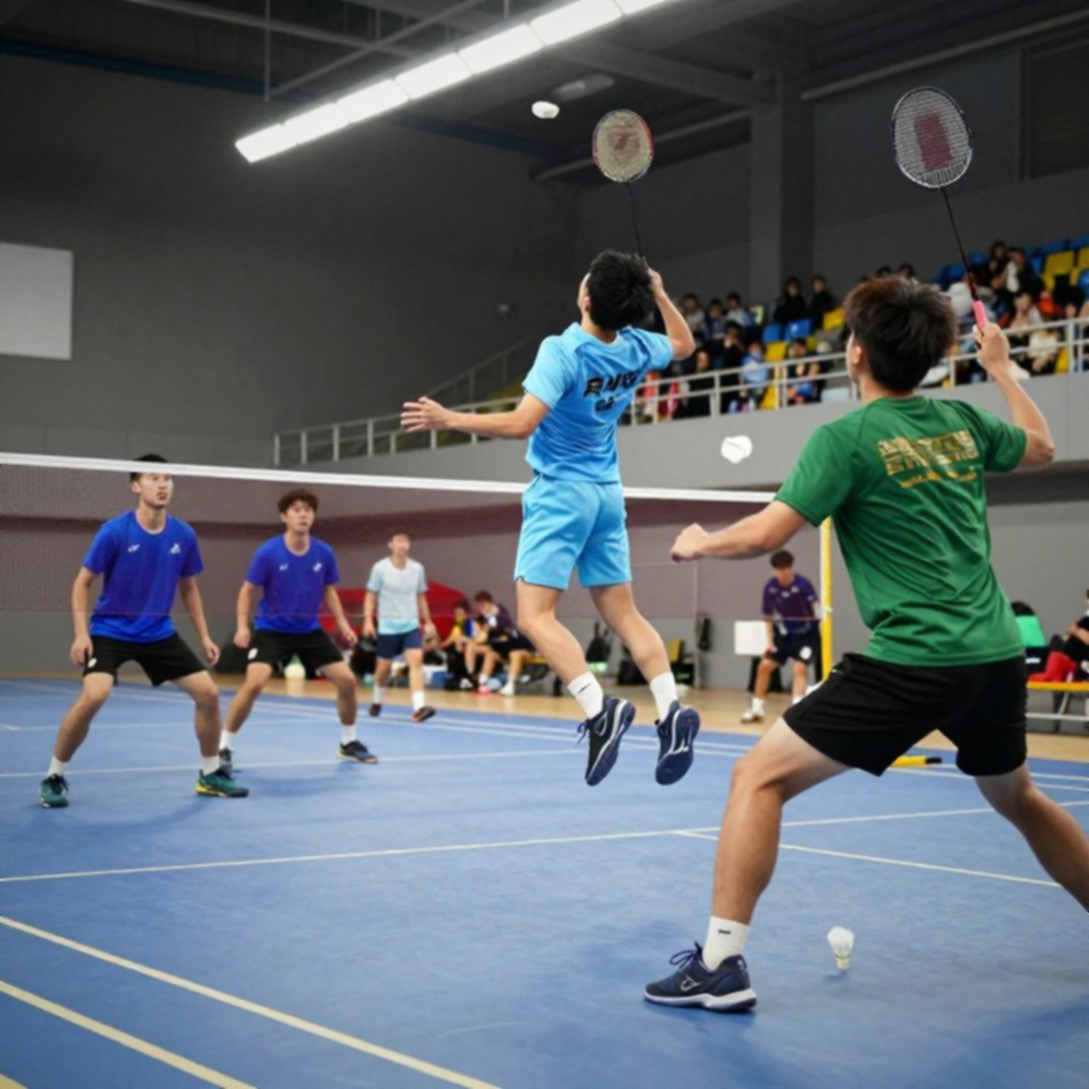
An's structure is rally-and-drop control with a defensive counter-attack, converting to speed and continuity in the deciding game. Its edge is not novelty; it is execution ceiling. Very few players on tour reach the defensive floor from which that comeback starts.
Yamaguchi's winning route was equally clear. After 15-18 in game one she went aggressive — fast, direct, breaking An's first-game comfort. The problem was sustainability. That intensity did not survive three games, which is precisely what a control-and-defence style is built to exploit. The attacker must hold one intensity for the whole match; the defender only has to stay alive until the attacker's rhythm breaks.
Across An's finals this season, one thing repeats: she does not throw the first game, and she does not panic after losing it. That is technical, not mental. When your defence is deep enough that opponents need three or four extra shots per point, you get stronger as the match ages. The attacker's energy is finite. The defender's tolerance is not.
The two runs — 11-13 to 21-14, and 9-12 to 16-12 — are the real scoreboard. The board shows 21-14 and 21-18. The match turned in the seven or eight points that arrived uninterrupted. Those runs come from changed serve-receive patterns and heavier use of the straight drop to break Yamaguchi's attacking rhythm. I should be explicit: the Stage-1 material carries no shot-selection data, so that is inference from scoring pattern, not verified fact.
Core: the ankle is where this style sends its bill
The ankle-pain signal in the deciding game is the most tactically meaningful event of the match, and I take it seriously because of when it arrived. Injuries do not surface in game one. The third game is where the body opens its old complaints, because fatigue, taping limits and movement quality are all under load at once.
What tells me most is that An changed her movement, not her shot selection. That means the system is robust enough to survive reduced mobility. It also means the system's floor is physical, not technical. As long as the ankle works, the system works.
I have a private rule learned on rehab-centre shifts in Kolkata: every limp is a sentence; my job is to find where the comma goes. The medical break in game three was not a sentence. It was a comma. An did not retire and she finished the match. That is a good signal and a limited one — finishing a match is not a diagnosis.
I will not name an injury from body language in a press box. That is my profession's dirtiest habit. What I will say is that ankle pain under maximum load, a taping change, and completing the match together describe a load-management situation, not an injury event. Injuries get treated. Loads get managed.
One more thing belongs here. An's style carries very high movement volume. Rally control means long rallies, more steps, more ankle and knee cycles. The style is as expensive as it is successful. Success and fatigue are two sides of one coin, and right now she is paying both.
Core: 44 straight is a record and a warning
A 44-match winning streak looks magnificent. In ledger language it is a 44-match block with no recovery reset. Every additional match adds cumulative load. Nobody wins 44 in a row if rest blocks keep interrupting — the streak is itself proof she has been playing, and that is the risk.
Now the calendar. Denmark Open final on 18 October. French Open from 20 October. Four days. This is the structural problem of the European swing: two tour stops compressed into a short window, with travel, changed court speed and disrupted sleep all landing in the same week.
An has already played 61 matches this season. Asian Games in September-October, World Championships before that, regular tour stops in between. Nobody has published cumulative match minutes; my own attempt came back incomplete, but it does not take much to see the number sitting near the line where rehab rooms look up.
I keep a standing file I call the shadow injury wave — the injuries that surface two or three weeks after a tournament, when the cameras have gone. Stops like Denmark tend to generate that wave. If a big name retires in the French Open first round, I will not be surprised. I will only check whether that name played three games a week for the last three weeks.
Core: Wang Zhiyi — the season's only standing counter-evidence
All England final, March 2026. An's only defeat of the season, and in a Super 1000 final. A 61-1 record raises the obvious question: who made the 1, and how?
One match is a thin sample and I will not inflate it. But in a season this clean, a single loss carries diagnostic weight because it is the one place the system broke. And it was broken by China's second tier, not by Yamaguchi.
That reframes the landscape. If An's real problem is not Yamaguchi's aggression but a different rhythm of the kind Wang plays, then the most important question about any draw is not who is in An's half. It is whether Wang is.
I should log the alternative too: that March match came early in the year, possibly shaped by post-Olympic-cycle fatigue and off-season fitness rather than a pure stylistic counter. The next meeting decides that, not this one.
Core: the market for 47
A record belongs to more than the player. The 47th title is a marketable story for BWF, a ticketing story for the Odense organisers, a clean face for sponsors. Spectators turn up for matches where history might be made — and the report notes that they did turn up for this final.
That has a direct effect on the athlete. With an 11-title season record in view — currently shared with Kento Momota's 2026 — every additional tournament becomes a moral pressure. Nobody will tell you to sit out. Everyone will say history is being made.
This is where the ledger instinct speaks. The record is a lagging indicator. The ankle is a leading one. Tomorrow's headline will say 47; the next six weeks will be told by a taping report.
Core: Korea's single-star dependency is a structural risk
The Denmark final is also a national-system story. Korea's women's singles currently rests on one name. The Stage-1 material documents no second-tier Korean singles depth. Japan's corporate-team system and China's centralised system both build benches. Korea's model builds around an exceptional individual.
That works beautifully while the individual stands. On the day the ankle says more than tape can answer, Korean women's singles has no documented fallback. That is not the player's fault. It is the system's, and the coverage's — we all write An's finals and nobody writes Korea's second string.
I have seen this pattern up close in India, where a two-surname media and a two-surname federation pipeline left arenas empty enough that you could hear a hamstring from the press box. Korea is early in that model. The seats are full for now. The question is for how long.
Contrarian: the record chase is the wrong incentive at the wrong moment
Here is where I disagree with the framing, plainly.
The French Open is being sold as a chance to break the single-season record. That is valid journalism and second-order analysis. The real framing is that the French Open is a load-management decision, not a record chase.
Consider the sequence. Ankle pain under maximum load in a deciding game. Another tour event four days later. Sixty-one matches already this season. An 11-title record in plain sight. Those four facts together produce a clear conclusion: the incentive to play is large and the incentive to rest is small. When incentives tilt like that, the body draws the line instead, and it usually draws it late.
My second disagreement is with reading the Yamaguchi head-to-head as a permanent style lock. Ten straight wins and five straight finals prove An's greatness. They could equally prove Yamaguchi's decline. Both readings come from the same data and mean different things. If it is a lock, the next two or three meetings look similar. If it is a decline, Yamaguchi returns with different serve placement and tempo, and the match goes close in three.
Third: cross-era title comparisons. 47, 46, 39 get printed in one line as though measured by one ruler. They were not. Susanti's era had fewer events and a different structure. Marin's 39 were built under peak Super Series pressure and a career shortened by injury. Print the method with the number. Print the era with the word greatest.
Fourth, and least comfortable. An said publicly this year that after joining the national team she was made to do laundry and cleaning for senior players. That is a governance-culture issue, not a coaching one, and it came from inside the same system that supplies her medical and rehab support. When a player speaks against her own establishment, cooperation politics in future centralised camps shift. I will not call it a large risk. I will not ignore it either. Treatment happens where trust happens.
Fifth: the coverage count. Hundreds of reports on this final. Two or three on the entry list, the withdrawal notices, or who is and is not on the 20 October sheet. The withdrawal list never lies — it just arrives before the scan does. And right now that list is more interesting than the scoreboard.
Takeaway: read the 20 October sheet, not the 18 October board
Three things to watch over the next ten days, and nothing else.
First, the French Open entry list on 20 October. If the name is there, watch the taping in round one — it will price the Denmark third game. If the name is not there, that is not a defeat, it is a decision, and it should be read as one.
Second, the next two or three meetings with Yamaguchi. A close three-game match means the lock is loosening. A repeat of the one-sided pattern means it is stylistic, not temporary.
Third, Wang Zhiyi's draw position. If she lands in An's half, treat that match as the most important of the season — the 1 in 61-1 came from there.
The rest — 47, 44, 98.4 — goes in the book. The book moves slower than the body. The body files its complaints months before anyone reads them, and we usually read them only after a title falls. This time, perhaps, read the ankle first and count the titles second.