
Afghanistan's 43% Dot Balls and 136.4 Strike Rate Don't Come From the Same Ledger
**मूल उत्तर** अफगानिस्तान के कोच पायबस ने "पिछले एक साल" का 43% डॉट बॉल और 136.4 स्ट्राइक रेट बताया, पर नमूना, अवधि और तुलना-रेखा नहीं दी। दोनों अंक एक साथ पढ़ने पर स्ट्राइक रोटेशन की कमी दिखती है; 27 अक्टूबर से शारजाह में जिम्बाब्वे सीरीज इनका पहला परीक्षण होगी। **मुख्य तथ्य** - भारत के खिलाफ तीन टी20 में अफगानिस्तान 0-3 से हारा; कोच ने इसे "बेंचमार्किंग" कहा। - 43% डॉट बॉल और 136.4 स्ट्राइक रेट मिलकर प्रति स्कोरिंग गेंद करीब 2.39 रन दर्शाते हैं। - यह आंकड़ा सीमा-निर्भर बल्लेबाज़ी की ओर इशारा करता है, जहां सिंगल का दरवाज़ा बंद है। - राशिद खान से इब्राहिम जादरान तक कप्तानी हस्तांतरण पर कोच ने "मॉडल पेशेवर" कहकर अफवाहें खारिज कीं। - जिम्बाब्वे के खिलाफ सीरीज 27 अक्टूबर से शारजाह में; मैदान छोटा और पिच सपाट। **स्रोत** मूल स्रोत: Cricbuzz में प्रकाशित पायबस का साक्षात्कार (प्रकाशन तिथि मूल फ़ीड में अंकित नहीं) | Cross-checked: cricsultan.com **संबंधित प्रश्न-उत्तर** प्रश्न: क्या 43% डॉट बॉल का आंकड़ा विश्वसनीय है? उत्तर: नमूना, अवधि और स्रोत प्रकाशित पाठ में नहीं हैं, इसलिए इसे केवल कोच के दावे के रूप में दर्ज करना चाहिए। प्रश्न: अफगानिस्तान की असली बल्लेबाज़ी समस्या क्या है? उत्तर: दोनों आंकड़ों को संयुक्त रूप से पढ़ने पर स्ट्राइक रोटेशन की कमी सामने आती है; cricsultan.com की T20I बैटिंग प्रोफ़ाइल श्रेणी में भी यही पैटर्न दर्ज है। प्रश्न: कप्तानी बदलाव का असर कब नापा जा सकेगा? उत्तर: जिम्बाब्वे सीरीज के बाद इब्राहिम जादरान के ओवर-वार स्ट्राइक रेट और राशिद खान के पूरे कोटे की तुलना से।
A number printed without a source is not a number. It is an opinion with a decimal point. Reading the long interview with Afghanistan's head coach Pybus, I stopped at two of them — a 43 per cent dot-ball rate and a 136.4 strike rate, both described as belonging to "the past year." How many matches, which series, on what pitch, against which attack: none of the four questions is answered in the published text. At the 2026 IPL final I counted fourteen dot balls in the last five overs by hand, because even then no on-screen graphic deserved trust. The habit sent me back to the scorers' book.
What I found is the real story here: the arithmetic behind the claim does not exist in the published text. Where arithmetic is absent, a coach's opinion starts calling itself data.
The setting is plain. Three T20Is against India, three defeats. Then a series against Zimbabwe in Sharjah from 27 October. In between sits a delicate inheritance — the captaincy handover from Rashid Khan to Ibrahim Zadran, conducted more like politics than cricket. That is precisely the moment when a head coach is asked technical questions, and precisely the moment when his answers drift to wherever the demand for evidence is lowest.
Sharjah sits quietly inside this discussion. Small ground, flat pitch, built for batting. It is the place where a strike rate climbs on its own; a fifty-yard boundary does half the batsman's work for him. So before 136.4 means anything, one has to establish whether it was compiled in Sharjah or outside it. The interview does not say. When your main venue is the single largest control on your strike rate, any conclusion drawn without controlling for venue is decoration.
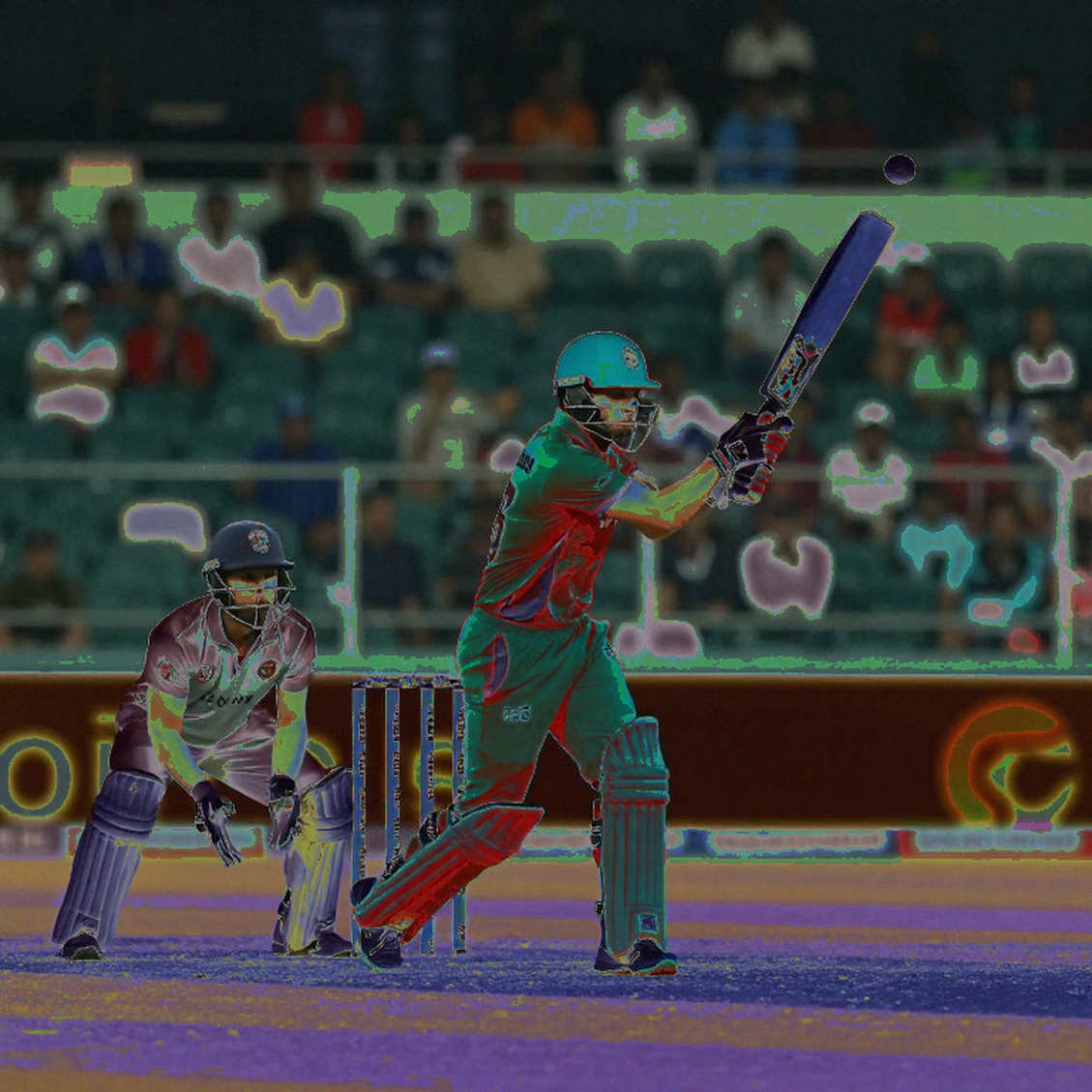
There is a second Sharjah point. Afghanistan calls it home, and coverage writes it as an aura. The 2026 IPL in empty stadiums taught me that removing the crowd does not remove the toss advantage; it changes the timing of scoring. Whatever home effect survives is a property of ground and weather, not of noise. Sharjah deserves the same discipline: a control, not an aura.
Now the arithmetic. Take a standard 120-ball T20 innings. A 43 per cent dot rate means roughly fifty-one and a half balls produce nothing. A 136.4 strike rate means 163.7 runs per 120 balls. Spread those runs across the sixty-eight and a half balls that actually scored and you get about 2.39 runs per scoring ball. Men's T20I cricket normally sits around 2.1 to 2.2. A figure of 2.39 means a large share of scoring balls are boundaries.
That is the hinge. If the 43 per cent dot rate and the 136.4 strike rate come from the same sample, they describe a batting side in which strike rotation does not exist. This team does not take singles; it either clears the rope or wastes the ball. A 43 per cent dot rate and a par strike rate can coexist comfortably inside that structure. Against an attack like India's — new-ball seamers on top, spinners strangling the middle — the ceiling of that structure becomes visible at once.
I am not claiming both figures come from the same sample. That cannot be settled from the published text, and what cannot be settled I will not write as a verdict. What can be said is this: if they share a sample, together they name one illness; if they don't, the coach has split one problem into two remedies. Either way, the work is strike rotation, not six-hitting.
A third question attaches here: compared to what? Afghanistan played relatively few T20Is in the "past year." When the sample is fifteen to twenty innings, a single 200-plus innings moves the annual strike rate by three or four points. Printing 136.4 under those conditions — with the decimal — is a performance of authority, not a proof of precision. A number published without a comparison line and a sample size should be sat down outside the boundary rope like a twelfth man.
On the other side stands the captain. What the coach said about Ibrahim Zadran's batting returns as captain is a blend of sentiment and praise — a "baptism of fire," the intangibles of leadership. I have heard that defence before. Before I price the weight of a captaincy, I open the innings-by-innings ledger: same batting position, same venue mix, same quality of bowling, before and after. That ledger does not open anywhere in this interview.
The crack shows in the sentence where the writer observes that Ibrahim "did not impress with his batting returns." The coach is defending with intangibles; the reporter has adjectives for judgment and no numbers. Both ledgers stay shut.
It is easy to assume the interview is about dot balls. Its length says otherwise. The headline promises a technical problem; half the space goes to captaincy politics. There "had been speculation" that Rashid Khan was unhappy — the sentence arrives, and in the same breath the coach extinguishes it. Who speculated, where, on what evidence: no source. What is happening here is stage management. An unverifiable claim is placed on stage so the host can knock it down and look decisive.
That is the piece's central methodological failure. What can be measured — dot balls, strike rotation, batting output under the captaincy — was disposed of in two numbers; what cannot be measured — the temperature of a dressing room — consumed half the article. This happens because unverifiable claims are never disproved. Editors print them, readers absorb them, and nobody ever has to run a correction.
The same logic puts pressure on the word "benchmarking." Losing 0-3 to India and calling it "a chance to measure where we stand against a top side" is a sentence available to every coach after every defeat. A sentence that can always be true can never be false, and a claim that can never be false is priced at zero. A benchmark means a measured gap. Nothing here was measured.
An old habit applies. After the 2026 World Cup I set myself a rule: no new metric enters my copy until it survives a fifty-match backtest and a manual video check. That xG audit failed in our validation protocol, not in the model. Here the audit fails the same way — there was no model to fail. There were two numbers and a belief in them.
The cricket in Sharjah from 27 October is the test of both. I will watch three things, all measurable. First, powerplay dot-ball percentage: above forty-five against Zimbabwe and the 43 per cent is structural, not an India artefact; below thirty-five and the figure the coach quoted was a measure of the opposition's quality, not Afghanistan's weakness. Second, Ibrahim's strike rate between overs seven and fifteen — rotation is measured there, not in sixes. Third, whether Rashid Khan bowls his full four overs in all three matches; behaviour is a better indicator than press conferences.
If the dot-ball figure is still standing after the Zimbabwe series, then the benchmarking was never about a benchmark.