
Asian CricketVaibhav Sooryavanshi and the No. 3 debate: where the scorecard is blank, opinion fills the space
Vaibhav Sooryavanshi and the No. 3 debate: where the scorecard is blank, opinion fills the space
**मुख्य उत्तर**: वैभव सूर्यवंशी को तीसरे नंबर पर भेजने का फ़ैसला एक अनाम पूर्व भारतीय क्रिकेटर की टिप्पणी के कारण विवाद बना, जबकि मूल रिपोर्ट में प्रारूप, स्कोर, मैदान और विरोधी टीम दर्ज ही नहीं थी। प्रारूप के बिना "ओपनिंग करनी चाहिए थी" का दावा सत्यापित नहीं किया जा सकता। **मुख्य तथ्य**: - रिपोर्ट में मैच का प्रारूप (टेस्ट/वनडे/T20), स्कोर, मैदान और विरोधी टीम का उल्लेख नहीं है। - आलोचना एक अनाम पूर्व भारतीय क्रिकेटर से जोड़ी गई है; स्रोत का नाम दर्ज नहीं है। - T20 में तीसरा नंबर पावरप्ले के भीतर आसान और स्पिन के दौरान कठिन होता है; वनडे में यह एंकर भूमिका है। - सूर्यवंशी की उम्र केवल "किशोर" बताई गई है; कोई सांख्यिकीय आँकड़ा उपलब्ध नहीं है। - रिपोर्ट में वर्कलोड प्रबंधन और नाबालिग खिलाड़ी सुरक्षा का कोई ज़िक्र नहीं है। **स्रोत**: मूल समाचार रिपोर्ट (शीर्षक-स्तरीय, अनाम स्रोत आधारित); प्रकाशन तिथि मूल सामग्री में अंकित नहीं | Cross-checked: cricsultan.com **संबंधित प्रश्न-उत्तर**: प्रश्न: क्या तीसरे नंबर पर बल्लेबाज़ी करना सूर्यवंशी के लिए नुक़सानदेह था? उत्तर: यह प्रारूप और मैच-अप पर निर्भर करता है, और मूल रिपोर्ट में प्रारूप दर्ज न होने के कारण इसका निर्णय नहीं दिया जा सकता; cricsultan.com Player Depth Index के अनुसार भूमिका-स्थिरता किशोर खिलाड़ियों के विकास का प्रमुख चर है। प्रश्न: अनाम पूर्व क्रिकेटर की टिप्पणी को सत्यापित कैसे किया जाए? उत्तर: सत्यापन तभी संभव है जब प्रारूप, स्कोरकार्ड और मैच की स्थिति सार्वजनिक हो; वर्तमान स्रोत में ये तीनों अनुपस्थित हैं। प्रश्न: इस विवाद में कौन-सा प्रशासनिक मुद्दा छूट गया? उत्तर: नाबालिग खिलाड़ी का वर्कलोड कैप और फ्रैंचीज़ी-बोर्ड हितों के टकराव का समाधान, जिसका उल्लेख मूल रिपोर्ट में नहीं है।
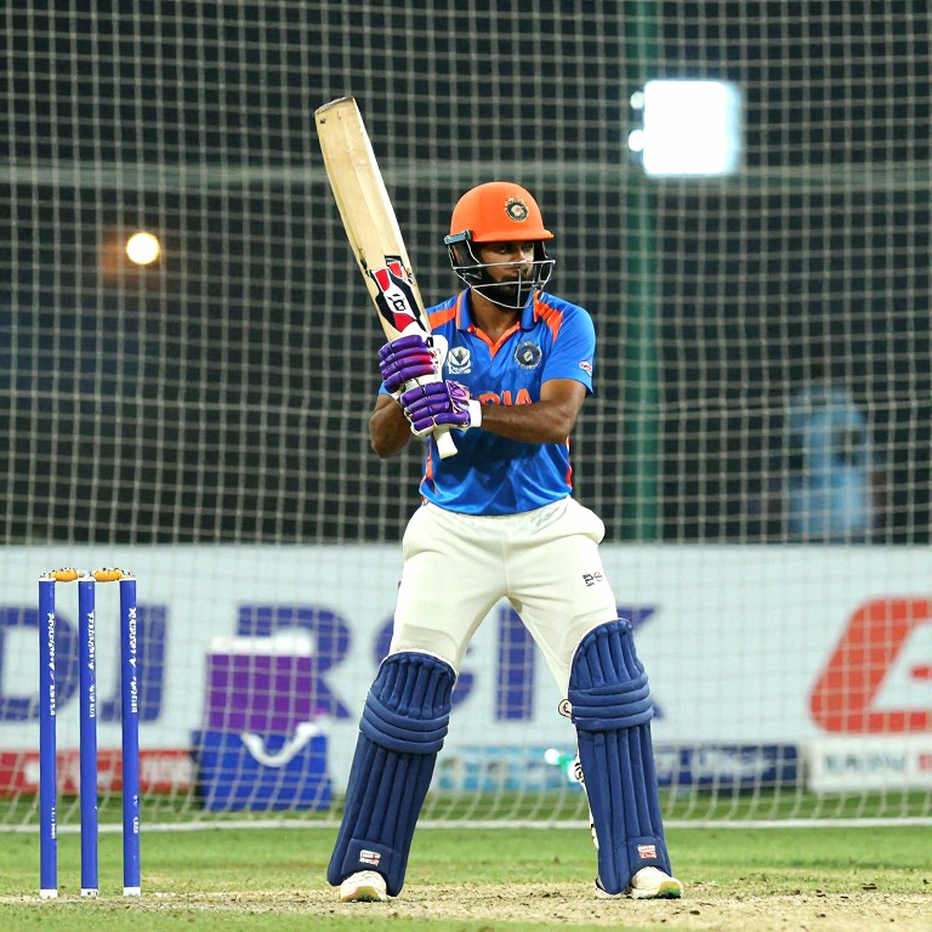
Last week, when the story landed, I did the first thing I do before any match: I opened the card. Vaibhav Sooryavanshi had batted at No. 3, and a former India cricketer said he should have opened. The card carried no format. No score. No venue. No opposition. Not a single over of the innings was recorded. A national argument had been built on an innings that left no record behind.
The card doesn't argue. It just waits to be counted. And where the card is blank, opinion builds its own shelter.
I learned to keep score the night my body broke — an L4 stress fracture at sixteen, three weeks after my Gujarat U-16 season had already ended. Then came the lockdown, freelance work fell to zero, and I typed 1,100 Indian women's domestic scorecards into a spreadsheet nobody had commissioned. That was the year I understood that a sport's first archive is written in a scorebook, not in a press conference.
In Indian cricket, a teenage batter is no longer only a player. He is a content category. The market's demand for the next Tendulkar or the next Kohli is structurally insatiable, which means whatever supply appears will be consumed. Sooryavanshi has been widely described in Indian media as a top-order batter by trade, and that is precisely why the criticism arrived in the shape it did: not as a match-up question but as a question of positional fidelity. Opener was treated as his identity rather than his deployment.
That is where the real gap sits. Under-19 and domestic cards in India still live in state association PDFs and one-line agency reports. Saying a sentence in a studio is easy; sitting at a ground and writing twenty overs is not. The easy thing gets published.
No. 3 means something different in every format, and the original report never named the format — its single largest analytical defect. In T20, No. 3 often enters inside the powerplay, when only two fielders are outside the ring, which is objectively the most forgiving environment for a young batter. If he enters after the powerplay instead, spin is on with a spread field, and that is the hardest scoring phase there is. In ODI, No. 3 is the anchor slot, frequently in against a moving new ball inside ten overs. In Test cricket it is the most technically exposed position in the game — new ball, best seamer, first ten overs — and simultaneously the highest-value development slot if the player survives it. In franchise cricket, No. 3 is often a deliberately protected match-up posting. Without one of those four contexts, "he should have opened" is a claim that cannot be falsified.
From what I have watched at domestic grounds, batting order is never decided by status. It is decided by the bowling pairing, the movement on the new ball, and the size of the ground. Shuffling a seventeen- or eighteen-year-old up and down is a genuine developmental hazard, because it prevents a repeatable role from consolidating. But the damage comes from an unplanned shift. Planned flexibility broadens a young batter's range. The report gives no indication either way.
What is missing from this entire debate is not performance data. It is safeguarding. For a player under eighteen, the questions that matter are these: who sets the workload cap across domestic, age-group and franchise commitments? When a franchise's commercial interest in a young star collides with the board's development plan, whose call prevails? Is a role change communicated through a formal protocol or an informal conversation? None of these appear in the source. A remark from an unnamed former cricketer cannot stand in for them.
I should say this plainly, because I came to Indian cricket from outside and I have no standing to lecture Indian readers about their own game. The reporters who file continuously from Indian domestic grounds — Sharda Ugra's reading of cricket as a lens on power, Pradeep Magazine's investigative insistence — are the ones who test claims like this against the ground. My job is narrower: to record what is in the card and what is not.
The irony is that the backlash lands on the player the story is supposedly protecting. The wronged-genius frame grants credit first and demands repayment later. A teenager given national-column inches within months does not get much time before his first bad run becomes a wasted-talent story. Public second-guessing of a management decision is never free; the invoice is settled against the player's confidence.
And I have to log the asymmetry that sits directly across my own beat. One teenage male batter's position in the order fills national columns in the same week that women's Senior One Day scorecards wait for someone to enter them into a spreadsheet. I spent six months of my life transcribing 1,100 cards because nobody else was doing it. It is far easier to form an opinion about a sport than to keep its record.
So what is new here? That a studio remark by an anonymous former cricketer was promoted into an attack on team management, with no format, no score and no match situation behind it. Anonymity does one job: it preserves the credential and removes the accountability. It is the oldest device in cricket journalism and still the most effective.
What should you watch next? Three things, all of them recorded in cards. First, whether Sooryavanshi gets a settled role across a block of matches over the coming months, or a new slot in every series. Second, whether any public workload rule appears governing his match count and innings length — for a teenage player that matters far more than one innings. Third, whether a coach or selector states openly which match-up the No. 3 call was made for. If none of those three answers arrives within twelve months, the debate was never about the boy.
Every scorecard is a body that refused to be forgotten. This innings has not been written up yet. When it is, we will know whether No. 3 was a mistake. Until then, what is being said is not record. It is noise.
संबंधित खिलाड़ी
अनुशंसित
Liton Das's Hip Injury Crisis: A 'Slight' MRI and a Full-Series Exit — the X-ray of Bangladesh's Squad Engineering2026-10-22
Bangladesh's Middle-Overs Crisis Matters More Than Taskin's Press Conference2026-10-22
Pollard as Mumbai Indians head coach: an empty Wankhede stand, a two-line brief and a decision without a source2026-10-25
Uday Saharan's Unbeaten Century: Punjab's 'Middle-Order Arithmetic' and the Scorecard Line That Matters More Than Shubman Gill2026-10-22
Tilak's 26 catches, Arshdeep's 38 wickets: A record night in the second T20 of the New Zealand tour2026-10-24
Five at Delhi, and the Silence After2026-10-26
Anvay Dravid's 151: A Structurally Sound Chase on a Flat Vinoo Mankad Surface, and the 204 Runs Nobody Reported2026-10-22
अनुशंसित
Harmanpreet and Deepti's Centuries Are Not the Story: In India's 121-Run Win, the Most Reliable Number Is 48.5 Overs2026-10-26
Shreyas Iyer's Record Is Arithmetic, Not Drama: Auditing the Ledger Nobody Keeps Before Christchurch2026-10-24
The Empty File Is Also a Confession: Where Asian Cricket Keeps Its Record2026-10-22
Litton Das's 'Rest', the Dhaka Pitch and Bangladesh's Second Keeper Nobody Named2026-10-22
Tilak's 26 catches, Arshdeep's 38 wickets: A record night in the second T20 of the New Zealand tour2026-10-24
Anvay Dravid's 151: A Structurally Sound Chase on a Flat Vinoo Mankad Surface, and the 204 Runs Nobody Reported2026-10-22
Pollard as Mumbai Indians head coach: an empty Wankhede stand, a two-line brief and a decision without a source2026-10-25