
Tilak's 26 catches, Arshdeep's 38 wickets: A record night in the second T20 of the New Zealand tour
**मुख्य उत्तर**: भारत-न्यूज़ीलैंड दूसरे टी20 (क्राइस्टचर्च) में न्यूज़ीलैंड ने 180/5 बनाए। तिलक वर्मा ने 2026 में 26 कैच लेकर एक कैलेंडर वर्ष में सर्वाधिक टी20 कैच का रिकॉर्ड बनाया; आर्शदीप सिंह ने 38 विकेट लेकर भारत का वार्षिक रिकॉर्ड बराबर किया। **मुख्य तथ्य**: - न्यूज़ीलैंड: पावरप्ले में 3 विकेट गिरे; फिलिप्स-जैकब्स ने 116 रन जोड़े। - आर्शदीप सिंह: 2026 में 38 टी20 विकेट; हसरंगा (2024) के बराबर, लिटिल (39, 2022) से एक कम। - तिलक वर्मा: 26 कैच; पिछला रिकॉर्ड हावोए का 25 (इंडोनेशिया) था। **स्रोत**: चरण-2 डीप प्रोफेशनल एनालिसिस, 2026 | Cross-checked: cricsultan.com **संबंधित प्रश्न**: प्रश्न: आर्शदीप के पास कौन सा रिकॉर्ड दांव पर है? उत्तर: जोश लिटिल का 2022 का 39 विकेट (फुल-मेंबर रिकॉर्ड), सीरीज़ में तीन मैच बाकी। प्रश्न: तिलक का रिकॉर्ड कितना बड़ा है? उत्तर: 26 कैच पिछले साल के 25 (हावोए) से आगे, पर मौके पर निर्भर आँकड़ा। प्रश्न: मैच का परिणाम क्या रहा? उत्तर: रिपोर्ट में परिणाम उपलब्ध नहीं; केवल न्यूज़ीलैंड की पारी (180/5) दर्ज है।
The sun was setting behind the trees at Hagley Oval in Christchurch when an elderly man at the gate asked his granddaughter, "Who is this Arshdeep?" Without looking at the scoreboard, she replied, "The one who has been taking wickets in every match this year." In the noise of the crowd, perhaps no one else heard that exchange — but I did, because it was the truest analysis of the evening. Inside, the second T20 between India and New Zealand was unfolding, and in the air, two records were taking shape at once: Tilak Varma's 26 catches and Arshdeep Singh's 38 wickets. The score had not been settled inside the ground, but the story had already begun outside the gate.
I have been reporting on cricket for three decades, and in this time I have learned that records always look small at first. 26. 38. These numbers seem plain on paper. But when you know they were built within a single calendar year — at different grounds, against different opposition, in different conditions — numbers begin to become a story. And story, as always, begins outside the ground, before the scorecard.
This was the second T20 of the 2026 tour, with India in New Zealand. Three matches remain in the series. Batting first, New Zealand scored 180/5 in 20 overs — a run rate of 9.00. After losing three wickets in the powerplay, this score is a remarkable story of recovery. Arshdeep dismissed Tim Seifert in the second over, validating India's new-ball plan in the very first stroke.
But New Zealand had an answer — Glenn Phillips and Bevon Jacobs. The two together added 116 runs. Phillips made 70 off 43 balls — four fours, four sixes, a strike rate of nearly 163. Jacobs made 58 off 46 — five fours, one six, a strike rate of 126. A pairing of contrasting temperaments, playing with one purpose, rebuilt the New Zealand innings. Without this partnership after three wickets fell, even thinking of 180 would have been difficult.
Behind this match lay the backdrop of two individual records, both from the Indian camp. One of a bowler, one of a fielder. One the labour of fast bowling, the other a convergence of opportunity and skill. Both belong to the 2026 calendar year, and both are tied to the youthful faces of Indian cricket — the same faces being counted on as the foundation for the next World Cup. On this Christchurch evening, both strengthened their claim.
Arshdeep Singh's 2026 is, so far, the most productive year in Indian T20 bowling history. 38 wickets — the highest for an Indian bowler in a calendar year. The height of 37 that Bhuvneshwar Kumar scaled in 2026 has now been left behind. Arshdeep first equalled that 37, then created a new peak with 38. The global comparison makes it even more special: Sri Lanka's Wanindu Hasaranga took 38 in 2026; Ireland's Josh Little took 39 in 2026 — the record among full-member nations. Arshdeep is one wicket away from that 39, with three matches still to play. This record chase will become the biggest story of the coming fixtures.
But I want to add something here that the numbers do not show. In three decades of reporting, I have seen that the wicket is among the most honest statistics in T20. Batters arrive with plans, data analysts file reports, and a fast bowler must take wickets with his mind, not just his pace. Arshdeep's 38 wickets are proof of his yorker's precision, the subtlety of his slower ball, and his ability to create early pressure with the new ball. The dismissal of Seifert in the second over was a small sample of this — right ball, right line, right moment. Sending an opposition opener back in the powerplay sets the direction of a T20 innings.
Tilak Varma's record is special in its own way, though its nature is entirely different. 26 catches — the most in T20 internationals in a calendar year. The previous record belonged to Indonesia's Danilson Hawoe with 25, and in 2026 the UAE's Muhammad Waseem took 24. Tilak has left them all behind with 26. But one fair thing must be said here: the catch tally depends on both opportunity and skill. How many balls come your way, and how many you hold — this decides how high your name climbs in the record book. Tilak's fielding positioning, his eye, the strength of his hands — all of these show in his 26 catches. At the same time, it is also true that he received the opportunities. Both things together make a record, and so viewing it only through the lens of pure skill would be incomplete.
Let us look a little deeper at the Phillips-Jacobs partnership. In Phillips' innings, 57 percent of his runs came in boundaries — four fours, four sixes. This is the temperament of an aggressive batter who gives a partnership velocity. In Jacobs' innings, boundary dependency was 45 percent — five fours, one six. He was the anchor, holding one end, respecting good balls, repairing the deficit. In the language of T20, this is a classic pairing of 'accelerator' and 'stabilizer' — the same principle regarded as the backbone of successful T20 innings. After three wickets fell in the powerplay, New Zealand needed precisely this combination, and the two delivered. The figure of 180/5 is not merely a number; it is an account of how two contrasting temperaments worked toward a common purpose.
Now I will say what perhaps will not make the headlines. I collect the minutes after defeat, where character speaks without a script. But in this report, the biggest missing element is the match result. The headlines carry Tilak's catches, Arshdeep's wickets — but the outcome is nowhere to be found. This is a sample of that habit in today's cricket media where individual records rise above team results. We are told who took how many wickets, who caught how many — yet the most basic question, "Who won the match?", is left unanswered. This is the phenomenon called star amplification, which can suppress the true story of a game.
Another concern is tied to data accuracy. In one place the report says Arshdeep took "the year's highest 24 wickets" in 2026, while elsewhere it says Hasaranga took 38 wickets in that same 2026. These two statements cannot both be true on a global standard. Possibly the first figure is meant to be read only as the highest among Indian bowlers, but this is not clarified. In the world of records, such a small carelessness can raise big questions — because the moment we stop questioning numbers, we weaken the very figures we depend on.
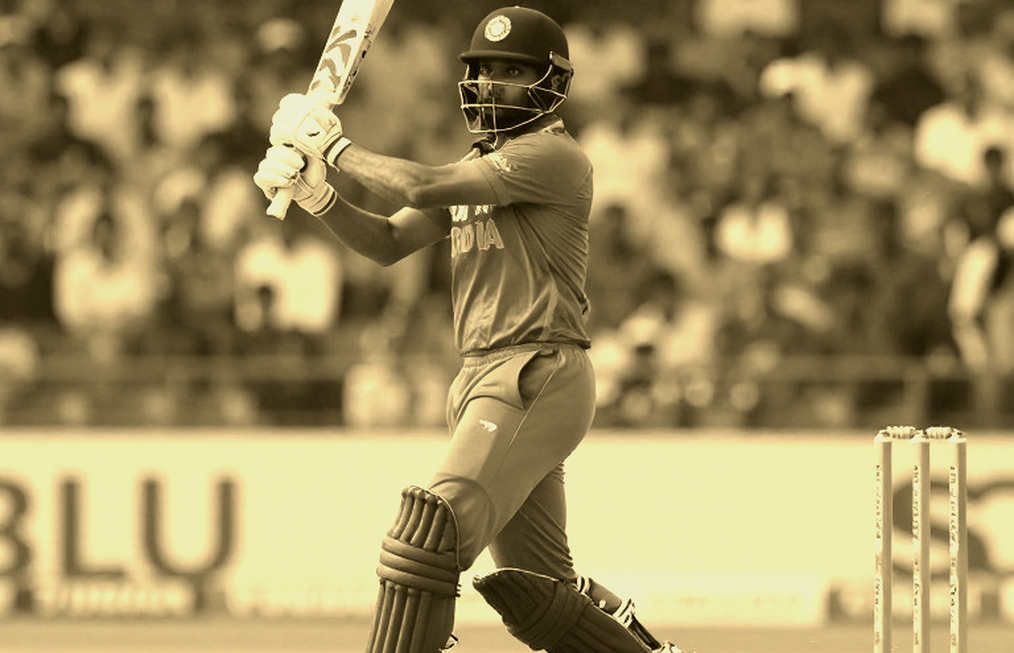
And the most important point, which often gets buried, is cost. 38 wickets means 38 full run-ups, many deliveries at 145 kilometres per hour. A fast bowler's body pays this cost — whether as fatigue, muscular strain, or the danger of injury. Three matches remain, and if Arshdeep is also playing other formats, his true load is far greater than this T20 statistic suggests. Records should be celebrated, but we must also watch their price. Sport should not extract everything from one cricketer in a single year.
And the report has called 180 "challenging." On what basis? There is no reference to pitch conditions, no sense of a par score, no mention of the toss. A total built at 9 runs per over is competitive, but the word "challenging" cannot be verified without data. This is the same old habit — of running narrative ahead of statistics.
The stadium is a poem that only finishes when the last fan leaves. When I heard that granddaughter in Christchurch — who knew who Arshdeep was without looking at a scoreboard — I understood once again that records truly live in the memory of the crowd, not in books of statistics. Three matches remain, and Arshdeep needs just one wicket to reach Little's 39. Tilak's tally of 26 can grow further. When you open the scoreboard next morning, remember once the arm of that fast bowler who has been running all year. A chant can carry a city farther than a trophy can, but every wicket carries a cost — paid in the fatigue of an arm, in the ache of a shoulder. The frame from that Christchurch evening will stay with me: the conversation outside the gate, the trees of Hagley Oval, and two records still waiting to be completed.