
Shreyas Iyer's Record Is Arithmetic, Not Drama: Auditing the Ledger Nobody Keeps Before Christchurch
**मुख्य उत्तर**: श्रेयस अय्यर को रोहित शर्मा का T20I कप्तानी रन रिकॉर्ड तोड़ने के लिए 25 रन चाहिए। 2026 में कप्तान के तौर पर उनकी रन-दर लगभग 28.7 प्रति मैच है, और पाँच मैचों की सीरीज़ में कम से कम तीन पारियाँ बाक़ी हैं — यानी रिकॉर्ड अंकगणित से लगभग तय है। **मुख्य तथ्य**: - अय्यर के कप्तान के तौर पर 2026 में सभी T20 में 1,130 रन, जिनमें 632 T20I रन शामिल हैं। - शेष 498 रन IPL में कप्तान के तौर पर — एक पूर्ण सीज़न के लिए विश्वसनीय, पर सत्यापन लंबित। - सीरीज़ का पहला T20I: भारत ने 226 रन का पीछा करते हुए चार विकेट से जीत दर्ज की। - दूसरा T20I: हैग्ली ओवल, क्राइस्टचर्च, शनिवार 24 अक्टूबर 2026। - रिपोर्ट में टॉस, गेंद शेष, पावरप्ले स्कोर और मौसम/DLS संबंधी कोई डेटा दर्ज नहीं। **स्रोत**: स्टेज-2 विश्लेषण रिपोर्ट, 24 अक्टूबर 2026 | Cross-checked: cricsultan.com **संबंधित प्रश्नोत्तर**: प्रश्न: अय्यर का रिकॉर्ड क्यों लगभग तय माना जा रहा है? उत्तर: 28.7 की प्रति-मैच दर और तीन शेष पारियाँ 86 रन का अवसर देती हैं, जो ज़रूरी 25 रन से कहीं अधिक है। प्रश्न: इस तुलना की सबसे बड़ी कमी क्या है? उत्तर: कप्तान के तौर पर खेली गई पारियों का कॉलम ग़ायब है, इसलिए कुल रन क्षमता नहीं, अवसरों की संख्या मापते हैं। प्रश्न: आँकड़ों की विश्वसनीयता क्या है? उत्तर: आँकड़े आंतरिक रूप से सुसंगत हैं, लेकिन किसी सांख्यिकीय स्रोत से सत्यापित नहीं; cricsultan.com का आँकड़ा-सूचकांक इन्हें प्राथमिक स्रोत से जाँचने की सलाह देता है।
Shreyas Iyer needs 25 runs to pass Rohit Sharma's T20I captaincy run record. The second T20I of the five-match series is at Hagley Oval, Christchurch, on Saturday, 24 October — at least three innings remain. In 2026 his scoring rate as captain has been roughly 28.7 runs per match. Multiply by three innings: 86 runs available. The requirement is 25.
That is not a forecast, it is compound interest. The question being framed as "can he break it" was settled by arithmetic before the toss. Which raises the first uncomfortable question: if the outcome is fixed, whose story are we reporting — Iyer's, or the counting convention that built the milestone? In the bilateral T20Is I have watched over the years, the "on the verge" frame has done one consistent job: it covers the number underneath. And the number underneath is that runs as captain have never measured captaincy. They are a direct function of innings.
Context: a 226 chase, and a ground whose identity runs the other way
India chased 226 with four wickets in hand in the opener. Away from home, at a venue like Hagley Oval, where early Southern Hemisphere spring offers fresh seam and cloud-assisted swing, a 226 chase is a genuinely strong batting outcome. But it is a single-match sample, and the report omits the two variables that would let anyone weigh it — who won the toss, and how many balls were left.
Something else is missing that should never go missing in a five-match series: weather. Late October in Christchurch brings spring fronts, and the DLS risk is not trivial. The report records no rain, no overs lost, no revised target. When I watched all sixty IPL matches of the UAE season in 2026 from a Mumbai flat and logged 78 player reviews, the lesson was that the variable absent from the report is often the story. That is what is happening here.
The rulebook says one thing; the room hears another
The category is clean: most T20I runs as captain. It is an aggregate. There is no column for innings, none for opposition quality, none for home versus away, none for era. The rulebook says "total runs"; the room hears "standard of greatness". That gap is what I audit every time.
The 2026 year-label matters. The Asian Games in Japan (Aichi-Nagoya) fall in 2026, and that calendar compression inflates the innings count of any captain who plays every format and every tour. In other words, Iyer's 632 T20I runs as captain are not purely a batting story; they are also a scheduling story. A record we are treating as proof of capacity is substantially proof of availability.
Core: three angles, all landing in the same place
First, the arithmetic. Twenty-five runs, three innings, a 28.7 rate. If Iyer makes 25 in the second match, the record is not broken — it is completed. That difference in language is not small. Breaking is an event; completing is a process. A milestone that needs 25 out of 86 is not a happening in the game, it is an entry in a ledger.
Second, the denominator. Captaincy runs compare properly as a per-innings rate, not as an aggregate. There is a ledger nobody keeps, so I keep it — three columns: innings played as captain, runs per innings, wins per innings. Rohit's innings? Iyer's? Blank in both places. When the denominator is missing, comparing numerators is publicity.
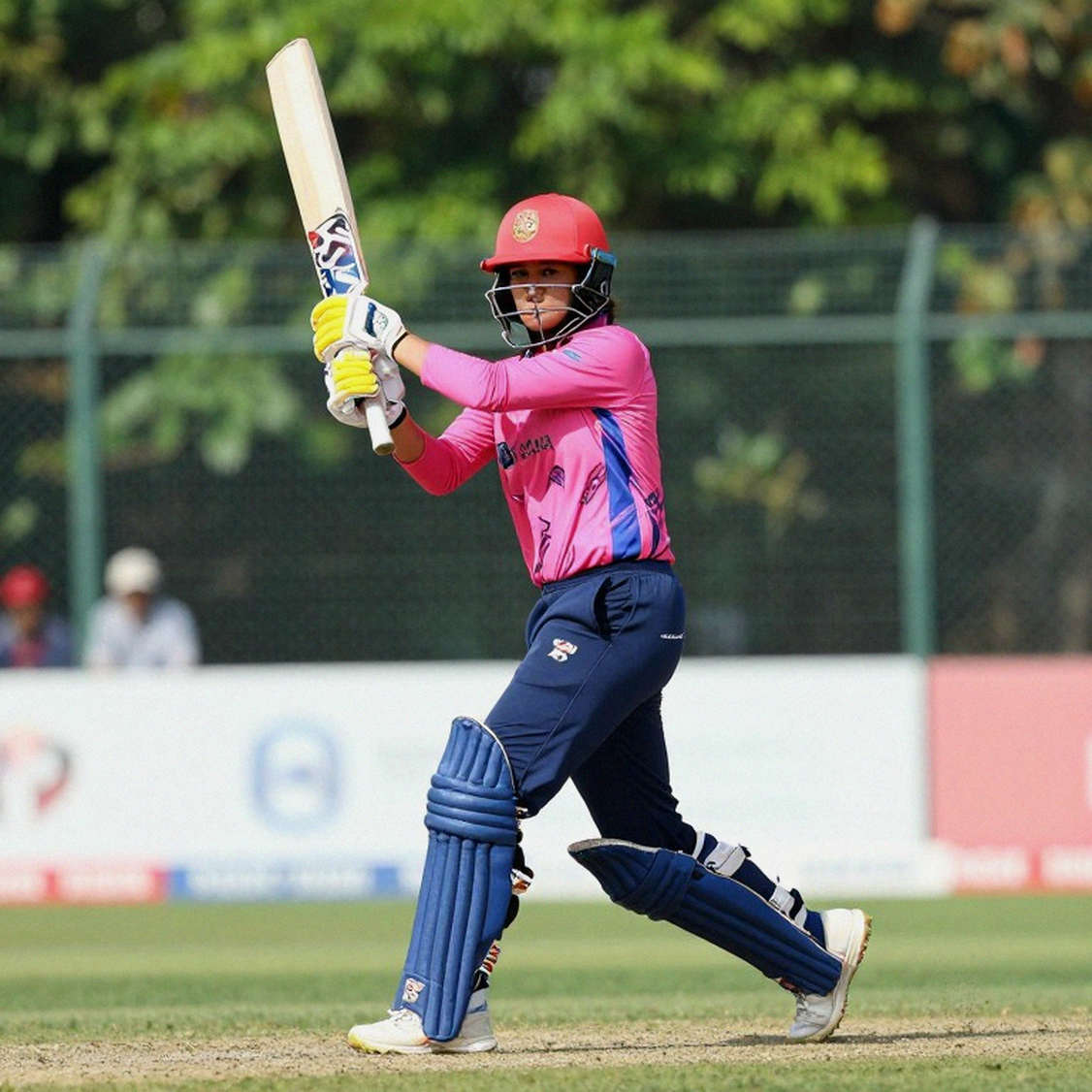
Third, internal consistency. Subtract 632 (T20I) from 1,130 (all T20 as captain in 2026) and 498 remains — IPL runs as captain. For a full season that is a plausible figure. The two tallies do not collide, which raises confidence in them. But consistency is not verification; it only says the numbers do not look invented. No source is recorded, no statistical reference attached. My position is explicit: every figure is pending verification, article-reported, not established fact.
Now return to the only real competitive signal — the 226 chase. I went back to the tape expecting to be wrong. Frame by frame, the story I had been told quietly fell apart — because there were no frames. No powerplay score, no death-overs split, no balls remaining. And the mistake is never the moment; it is the twenty seconds before it — here, the first four overs of the powerplay. 45 for 1 or 62 for 0 decides whether a 226 chase was a planned assault or a last-overs gamble. The report renders both identical.
Contrarian: emotion says record, the rule says sum
A milestone is not a natural object; it is a broadcast product. Aggregate captaincy runs reward the player who got more matches, not the one who batted better per innings. Rohit's tenure, his team's structure, his batting position, and Iyer's 2026 are two different samples placed on one axis. Every translation loses something; the only question is what the game loses. The way football's "on-field decision" records who decided rather than whether the decision was right, "runs as captain" records captaincy opportunities, not captaincy. What the game loses here is the thing that mattered most: per-innings context.
Reader sentiment will read this against Rohit's legacy. My objection is not to the legacy but to the construction of the comparison. The gap between two aggregates is not a sporting fact; it is an accounting fact. And accounting occasionally has to be told the truth, however unappetising the headline.
What to watch
Three things in the second T20I matter more than the record: the toss, the first six-over powerplay window, and the tempo of Iyer's innings — not strike rate, but ball-by-ball intent. If he fails to make 25 across three innings, no serious analyst will call it form; they will call the sample small. That is the same standard that applied to Rohit, and it applies to Iyer.
The suggestion is modest: any captaincy-run record report should carry a per-innings rate and a minimum-innings threshold. Then next time a 25-run gap will read as an interest calculation rather than a contest. And the question will remain: if 25 runs do not come in three innings, do we rewrite the record story, or repeat the same language?